


How to Humanely Repel Raccoons, Skunks & Squirrels
Protect your home without poisons, traps, or stress.
The Problem: Curious, Clever, and Costly
Raccoons, skunks, and squirrels might look harmless, but when they move in, they cause serious trouble.
- Raccoons: Dig through trash, tear insulation, and can spread disease.
- Skunks: Spray when startled, leaving a smell that lingers for weeks.
- Squirrels: Chew through wiring, wood, and even attic vents.
Once they’ve decided your home or yard is a comfortable place to stay, getting rid of them can feel impossible — especially if you don’t want to use poisons or inhumane traps. The good news? You can safely drive these animals away and keep them from coming back.
Step 1: Identify What’s Attracting Them
Most wildlife invaders aren’t trying to bother you — they’re looking for food, shelter, or warmth.
- 🗑 Trash: Keep bins sealed and locked; raccoons are expert lid-lifters.
- 🌽 Pet food & bird seed: Store indoors or in sealed containers.
- 🌳 Attics & crawl spaces: Check for loose siding or vent gaps.
- 🌾 Compost piles: Bury food scraps or use closed compost bins.
Removing easy meals and cozy nesting spots makes your property instantly less appealing.
Step 2: Use Sound and Motion to Keep Them Away
Wild animals rely on a sense of safety. When that’s disrupted, they move on. That’s where The Guardian comes in — a smart, humane pest repeller designed to mimic nature’s own warning signals.
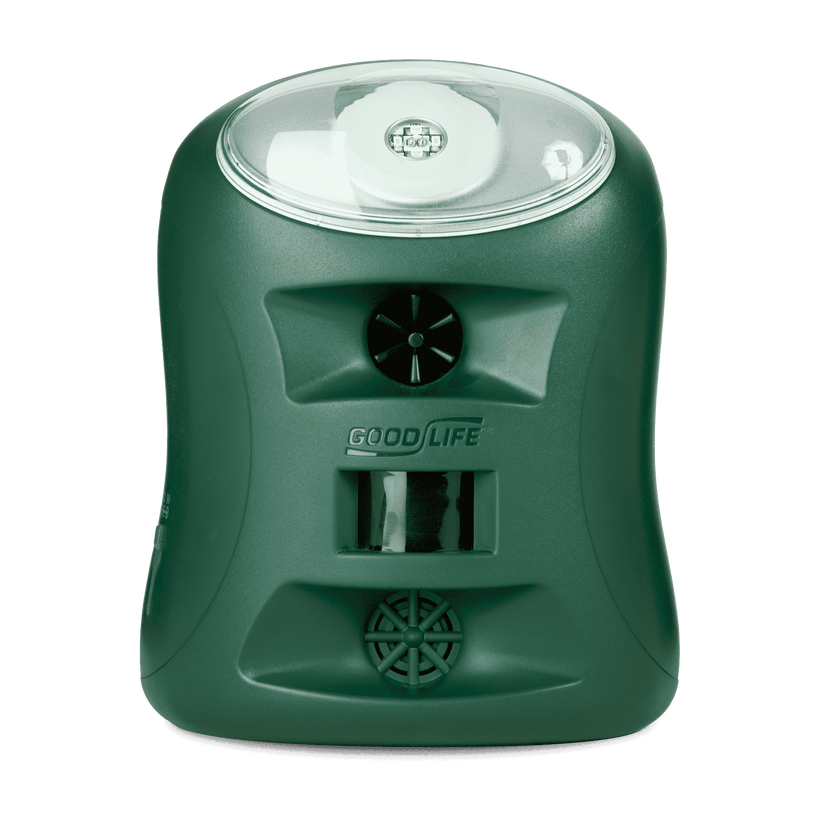
When the motion sensor detects movement, it activates:
- ✅ Ultrasonic sounds that disorient animals
- ✅ Predator calls that trigger the instinct to flee
- ✅ Strobe lights to startle nocturnal pests
Step 3: Reinforce Your Defense
Even with deterrents in place, sealing entry points and keeping your yard tidy helps ensure they don’t come back.
- Patch roof or soffit holes larger than ¼ inch.
- Trim tree branches touching your roof (squirrel superhighways).
- Clean up fallen fruit or pet waste — both attract skunks.
- Use motion-activated lights near trash areas for extra deterrence.
Step 4: Choose an Eco-Friendly Solution
Many homeowners waste money on short-term fixes — sprays that wash away, traps that need resetting, or poisons that endanger pets and wildlife. The Guardian works 24/7 to protect your property, covering up to 5,000 sq ft.
Because it’s chemical-free, you can use it confidently around children, pets, and gardens.
Take Back Your Yard Today
You don’t need harsh chemicals to have a pest-free home. By eliminating attractants and using humane tools like The Guardian, you’ll enjoy lasting protection — naturally.
Get The Guardian Now


